20 November 2026
Bathroom safety checks for older adults living at home
Presented by @carecircle
Why the bathroom needs a second look
The bathroom is one of the most hazardous rooms in any home, and for older adults the risk is even higher. Wet surfaces, limited space, and hard fixtures create conditions where a slip can quickly lead to a serious injury. Falls are a leading cause of hospital visits among seniors, and many of those falls happen in or near the bathroom. The good news is that most of these accidents can be prevented with a few practical changes. This article walks through the key areas to check so you can make the bathroom safer without turning it into a clinical space.
Flooring and surfaces
The first thing to look at is the floor. Smooth tiles look clean but become dangerously slippery when wet. A non-slip mat placed outside the shower or bath gives the feet somewhere stable to land, but it needs to be secured so it does not slide. Better yet, replace the flooring altogether with slip-resistant vinyl or textured tile. If that is not an option, adhesive non-slip strips applied to the floor in the shower zone can make a big difference. The same logic applies to the bath itself: a non-slip mat inside the tub reduces the chance of slipping while standing or adjusting position.
Water that sits on the floor after a shower is another hazard. Check that the shower curtain or door closes properly and that the drain is clear. A small squeegee kept in the shower makes it easy to push water toward the drain before stepping out. For anyone unsteady on their feet, a shower chair or a fold-down seat allows the person to sit while washing, which removes the fall risk almost entirely.
Grab bars and support rails
Grab bars are the single most effective addition for bathroom safety. They provide something solid to hold when getting in or out of the shower, stepping over the edge of the bath, or rising from the toilet. The key is placement and installation. A bar near the shower entrance helps with balance, one inside the shower gives support while turning, and one beside the toilet aids the transfer from sitting to standing. For these bars to be safe, they must be anchored into wall studs or secured with heavy-duty wall anchors designed for the weight load. A suction-cup grab bar can test a good position, but it should never be relied on as a permanent solution because it can lose grip over time.

If the person uses a mobility aid such as a walker or a cane, a grab bar that extends past the edge of the bath or toilet gives extra reach. Also consider a shower head on a flexible hose. That lets the person direct water while seated, reducing the need to twist or reach.
Lighting and visibility
Good lighting prevents trips and missteps. A dim bathroom can hide a puddle on the floor or an uneven rug edge. Install a brighter overhead light or add a night light that stays on all the time. A night light near the bathroom door and one inside the room help with middle-of-the-night visits when the person may still be groggy. Motion-sensor lights that turn on automatically are even better because there is no switch to fumble for.
Contrast also matters. A white toilet on a white floor can disappear visually. A coloured toilet seat or a contrasting floor mat makes the edges easier to see. The same principle applies to grab bars: a bar that stands out against the wall is easier to spot quickly.
Temperature control and scald prevention
Hot water burns fast, and older skin is thinner and more vulnerable. Set the water heater thermostat to a maximum of 50 degrees Celsius (about 122 degrees Fahrenheit), or install anti-scald devices on taps and shower heads. These devices automatically reduce water flow if the temperature spikes. A thermostatic mixing valve on the shower keeps the temperature steady, so the person does not get a sudden blast of hot water when someone else uses a tap elsewhere in the house.
Check the water temperature before stepping in. A simple colour-coded tap handle or a lever that stays at a specific setting can make this easier. For anyone with limited hand strength, lever-style taps are easier to operate than round knobs.
Toilet height and accessibility
A standard toilet is low, which forces the hips and knees to bend deeply when sitting or standing. A raised toilet seat adds height and reduces the effort needed. Alternatively, a comfort-height toilet (roughly 17 to 19 inches high) works well for most people. If a raised seat is used, make sure it is securely attached and does not shift. A toilet frame or a grab bar on each side gives additional support.
Bidets or handheld sprayers are worth considering because they reduce the need to twist and reach for toilet paper. They also improve hygiene for someone who has difficulty with upper-body movement.
Emergency alert options
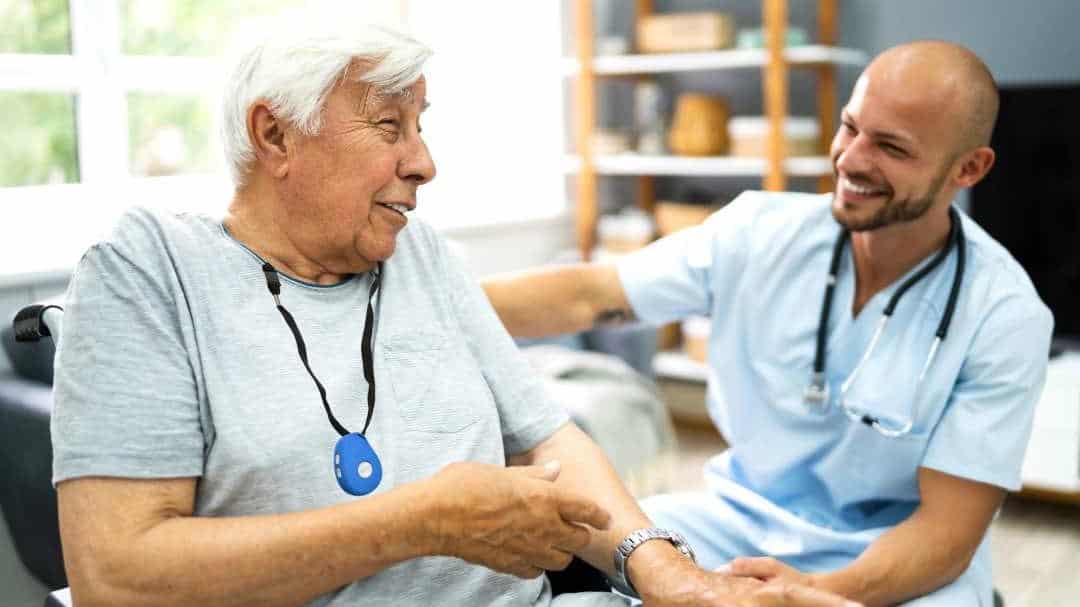
Even after all the safety improvements, a fall can still happen. When it does, the person needs a way to call for help quickly. A wearable medical alarm with fall detection is one of the most practical tools for this situation. It automatically senses a hard fall and sends an alert to a caregiver or family member, even if the person cannot press a button. This type of device is particularly valuable in the bathroom, where a fall might leave the person unable to reach a phone or a wall-mounted alarm.
Some systems use a pendant worn around the neck, while others are worn on the wrist. Both are waterproof and can be worn in the shower. The key feature to look for is automatic fall detection, because the moment after a fall is disorienting and the person may not remember to push the button. A medical alarm with fall detection removes that reliance on the user being conscious or able to act.
Alongside the alarm, a clear response plan matters. The caregiver should know who to call first and how to get into the home if the door is locked. A spare key kept in a secure lockbox outside the house can save precious minutes during an emergency.
Organising the space
Clutter creates obstacles. Towels, bathrobes, and toiletries left on the floor or hanging low can trip someone. Install hooks at shoulder height to keep items off the floor. Use a shower caddy that attaches to the wall rather than one that sits on the tub edge. Keep pathways clear so a person using a walker or a cane can move freely.
Mirrors and cabinets should be easy to reach. A cabinet that requires stretching or bending can become a fall risk. Rearrange frequently used items so they sit between shoulder and waist height. A small step stool might seem helpful, but it is better to store items low or use a long-handled reacher tool.

Reviewing the layout
If the bathroom is being renovated, the layout itself can be improved. A curbless shower with a gentle slope to the drain eliminates the step-over edge. A wider door frame accommodates a walker or a wheelchair. A pocket door instead of a swinging door saves space and avoids the risk of someone falling against the door and blocking entry. These changes are significant, but even small adjustments like moving the towel rack or adjusting the shower curtain rod height can improve daily safety.
Making a bathroom safer does not have to mean a complete overhaul. Simple changes like better lighting, grab bars, non-slip surfaces, and a reliable emergency alert system can dramatically reduce the risk of a serious fall. For anyone living at home independently, these checks are a practical way to stay safe and maintain confidence in daily routines.